Money
At least 50% off from FlexSub
Subscribe Now
Quick question: how much do you spend on subscriptions each month? Take a guess before you read on.
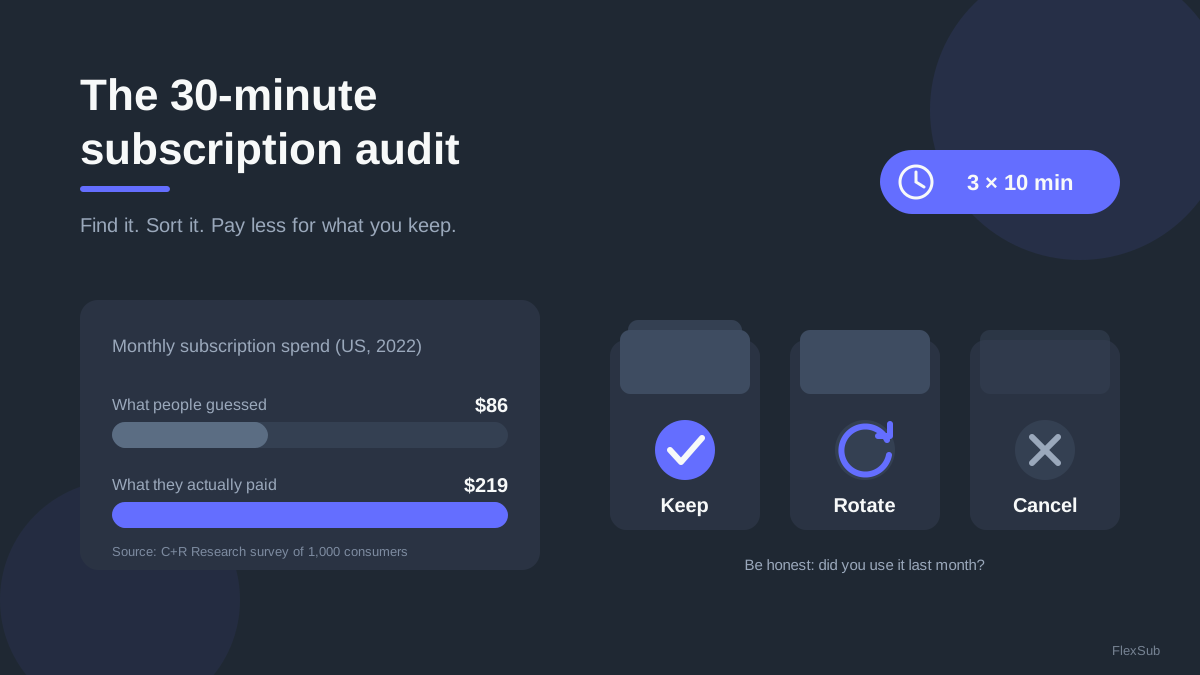
Whatever number you picked, the real one is probably bigger. When C+R Research asked 1,000 US consumers in 2022 to estimate their monthly subscription spend, the average guess was $86. When they added it up properly, the actual figure was $219 — about $133 a month more than people thought. Nearly a quarter of people were out by $200 or more.
That gap isn't because people are careless. It's because subscriptions are designed to be forgettable. They renew quietly, they're spread across different cards and app stores, and each one on its own looks small. The good news is that closing the gap takes about half an hour, and you don't have to give up the services you actually enjoy.
Why subscriptions slip under the radar
A normal purchase asks you to decide every time. A subscription asks once and then never again. C+R found that 86% of people had at least some subscriptions on autopay, and 42% admitted they'd forgotten they were still paying for something they no longer used.
The forgetting is getting worse, not better. A March 2026 survey of 1,272 US adults by Self Financial found that 59.9% of people had at least one paid subscription going unused every month — around 2.6 unused subscriptions each, worth roughly $26.79 a month or about $321 a year. And 70% said they'd forgotten to cancel a free trial at some point.
Streaming services were some of the most commonly left idle in that survey, but so were fitness apps, food delivery memberships and AI tools. It's not one category. It's the habit.
Step 1: Find everything (10 minutes)
You can't cut what you can't see. Pull up the last two or three months of statements and look for anything that repeats. Check each of these places, because subscriptions hide in all of them:
- Your bank and credit card statements. Search for words like "subscription", "monthly", "premium" and the names of any services you remember signing up to.
- Your phone's app store. Both the Apple App Store and Google Play have a Subscriptions page in your account settings that lists everything billed through them.
- PayPal. It keeps its own list of automatic payments, separate from your card.
- Your email. Search your inbox for "your receipt", "renewal" and "trial ending". Annual plans are the easiest to forget because you only see them once a year.
Write every one down in a single list with its price and how often it bills. Convert annual plans to a monthly figure so you're comparing like with like.
Step 2: Sort into keep, rotate or cancel (10 minutes)
Now go down the list and be honest about each one. The question isn't "is this good?" — most of them are. The question is "did I use this enough last month to justify paying for it?"
Keep the ones you use every week and would genuinely miss. Your main music service, the study platform you're halfway through a course on, the design tool you use for work.
Rotate the ones you love in bursts. This is the category most people miss. You don't need every streaming service running all year. Subscribe when the season you're waiting for drops, binge it, then pause and move to the next one. Plenty of people already do this: streaming analytics firm Antenna reported that by the end of 2023, nearly a quarter of US streaming subscribers had cancelled three or more premium services in the previous two years, many of them coming back later.
Cancel anything you haven't opened in a month and can't name a specific reason to keep. If it turns out you miss it, you can always come back.
Step 3: Pay less for what you keep (10 minutes)
Once you know what's staying, look at how you're paying for it.
- Check the plan tier. Are you paying for four screens when only you watch? For a family plan when the family has moved out? Downgrading is often a bigger saving than cancelling.
- Match the length to how you use it. A monthly plan makes sense for something you rotate. A longer plan usually works out cheaper per month for something you'll use all year.
- Look for bundles you already have. Some phone, internet and credit card plans include a streaming or music subscription. You might be paying twice for the same thing.
- Compare where you buy it. The official price isn't the only price. Services like FlexSub offer discounted plans on many of the same subscriptions, in lengths from under a month up to a year, so a "rotate" service doesn't have to lock you into a long commitment.
Make it a habit, not a one-off
The audit only works if you repeat it. Two small habits keep the leaks from coming back:
- Put a reminder in your calendar the day before every free trial ends. Do it the moment you sign up, not later.
- Re-run this audit every three months. It gets faster each time, because your list is already written.
Half an hour, a few times a year, is a small price for knowing exactly where your money goes.
If your audit leaves you with a shortlist of services you want to keep, browse FlexSub's subscriptions to see which ones you could be paying less for — with flexible lengths that suit the way you actually use them.
Money
At least 50% off from FlexSub
Better, flexible and cheaper subscriptions for a wide range of services in just a click of a button.
Get started now